Friday, September 12, 2008

Japan (Tokyo) April/May 2008 D-2


Travel Highlight – Tokyo (Asakusa, Yoyogi Park, Meiji Shrine, & Takeshita Dori)

Kyo (Today) is the 1st day of our Japan Highlight Bus trip. We had to meet Mochan-san, our Japanese host, at the Kita(North) Exit of the Tokyo Station for some sightseeing activities in Tokyo. Mochan owned a mini bus and throughout the next ten days (27 April – 6 May 08), we had to rely on his bus to take us to various touristy places in Shizuoka, Nara & Kyoto. Mochan’s full contact details in Japan are:
Mr Toshikazu Mochizuki
35-2, Ishikawa, Shimizu-Ku
Shizouka City PC-424-005, Japan
Tel: +81908459 (mobile); +81543632566 (home)
Website: www.couchsurfing.com/people/mochi

Mochan, who is in his early 40’s, had traveled widely to many overseas countries via the Couch Surfing network. In March 08, Mochan visited Jakarta, Seoul and Kuala Lumpur. He lives in a double storey brick house in Ishikawa, a suburb in Shimizu of Shizouka District. Shimizu is about 164km from Tokyo. His strong passion in travel has led him to start a local traveler’s club called Shizuoka Wish Club House. Each year, Mochan takes the initiatives to organize a number of sightseeing activities in Japan. This was the second time he organized the Japan Highlight Bus trip for local and overseas members. For the Malaysian CS members (Cheng, Hitomi & Artem), we were proud to be his first overseas guests from Malaysia! Two CS members from France ie Van & Claire were in our bus trip too. Each of us contributed Y2,000 (RM64) per day to Mochan to defray the cost of the fuel and toll fees incurred during the travel period. Accommodation was free but we chipped in to buy some groceries, meat, fruit / vegetables so that our group could dish out some home cooked meals for dinner at Mochan’s house. What I enjoyed most was the friendship, home stay, home cooked meals and free & easy travel, which allowed us to see Japan in a greater depth and also to gain a better understanding of the Japanese lifestyle and culture which we might not able to experience if we were to travel in a package tour!


So the real action started this morning. We checked out our hostel at around 09.00 and took a Metro Tokyo & JR line to the Tokyo station. On arrival at the station, we had difficulties in finding the right exit as this station is connected to a big high-rise commercial complex, Marunouchi Building. We wasted thirty minutes before Mochan was able to locate us, thanks to a Samaritan onna(lady) who offered to use her mobile phone to contact Mochan and picked us from a spot somewhere in this complex Mochan took us to his bus, which was parked in ma-e(front) of the Kita (North) Exit of the Tokyo station. As we were late by almost an hour, a group of the overseas CS members (7-8 Italians) & Wish Club members (mainly locals) had gone to visit the East Garden of the Imperial Palace and we had to wait for their return.

At 11.30, Mochan drove us to Asakusa and our first stop was the Sensoji Temple area, which we had visited yesterday. Our group took a picture in ma-e (front) of the Kaminarimon Gate. I had my lunch at the Nakamise Dori(street) and bought a takeaway pack of grilled octopus for Y500 (RM16) and together with two local members; we found a public place with tables and chairs to sit and enjoy our lunch. The tourist belt of Asakusa has a number ofsushi &sukiyakirestaurants catering tosushi lovers. A few boutique restaurants servedtsumami (wine and vegetable dishes) for their discerning customers.

After the lunch, a local member suggested that we pay a visit to a Kimonogarment shop, located in a busy touristy street nearby the temple area. The shop offered a good mix of quality Kimono at bargain prices. As the quality and the price were attractive, both Hitomi & Artem ended up buying one. It appeared that their shopping mood had begun and more to ensue I supposed!


After Asakusa, our next stop was Yoyogi Park. This spacious park has a central square with a beautiful lawn, fountains and bird sanctuaries. As today was a weekend, the park was crowded with people and there were a lot of recreation & seinen(youth) activities organized in the park area. On the sidewalk of the park, we saw a number of small musical bands (3-4 people) playing their electric guitars and drums; blasted with loud speakers to thrill the bystanders and music lovers. The lead singers were there to promote their favorite CD songs for Y500 each (RM16). There were no less than ten musical bands performing on that day and the music generating from their electric gadgets made the entire place very lively and noisy! Both my eardrums were badly bombarded after spending 15 minutes in the area. A short distance away, a group of local danshi(male) adults wearing black jackets were seen dancing “ferociously” on an open ground with loud music playing the local & western hit songs to thrill the passing crowd. I spotted a group of three teens car carrying “free hugs” placards inviting young girls for a picture session with any of the guy poising in a free hug position! If I am a young girl of sweet seventeen, I do not mind accepting a free hug from these seinen (young looking teens) with cheeky baby face 


I walked around the central square and bumped into small families, obasan (aunties) andojisan (uncles) taking along their pet dogs, all smartly dressed, for a stroll in the park. Others were found jogging, having picnics and sitting around at the lawn enjoying the surrounding environment.

On the hidari (left) hand side of the Yoyogi Park where Mochan’s bus was parked, there was a flea market, with numerous yatai (roadside stalls) selling all sorts of mono (merchandise) ranging from food to fashion wears etc.


As the Meiji Jingu Shrine is located at the kita (northern) end of the Yoyogi Park, I took the opportunity to pay a visit to this famous shrine. I understand this shrine was built for the Emperor and Empress in the Meiji Era. The original main buildings were lost in the war. The present one was built with wood donated by the people


After the Meiji Shrine visit, I walked to the Takeshita Dori (street), located on the opposite of the JR Harajuku station. This place is popular among the local seinen (youngsters) as most of the idol goods are on sale in this dori(street). The place was jam packed with people (Chinese interprets as “People Mountain People Sea”) and I had to jostle every inch to walk through this busy dori. I gave up after walking for less than ten inutes and decided to head back to the Yoyogi Park.

On the way to the Yoyogi Park, I passed by the Tokyo Gymnastic Olympic Stadium. The front entrance of the Stadium was packed with many seinen (young people) lining up to enter the Stadium and the queue was so long that it virtually blocked the pedestrian way. It was sokonran (difficult) for me to pass through! I had to cross over to the opposite side of an overhead bridge in order to avoid this madding crowd! Our sightseeing activities forkyo (today) ended here.

Mochan picked us up at 18.30 and drove us to his hometown in Shimizu, Shizouka, the traveling time took two hours. We finally arrived at his home, a two-storey brick house in a quiet residential suburb of Ishikawa. We had our first home cooked meal (using a gas operated hot plate) at Mochan’s house. Guessed what we ate? A delicious dinner of stir-fried ramen noodles with cabbages, chicken meat and sliced Japanese apples as dessert.

Today is our first day in Japan. The best is yet to come!


Japan (Shizuoka) April/May 2008 D-3


Travel Highlight - Shimizu (Miho Beach, Hagoromo-no-matsu, Ninhodaira Peak, Kakegawaga Castle, Shimizu Port, Kashi Market & Seikenji Temple)

Shizuoka is the home city of Mochan, our host in Japan. For the next seven nights, we stayed in Mochan’s house in Ishikawa, Shimizu-Ku, Shizouka city and focused our visits in the surrounding areas. Shimizu has a population of around 800,000 people.

Early in the morning, Mochan took us (Cheng, Hitomi, Artem, Van & Claire) to visit the Miho beach, Shimizu. The Miho beach is part of the Tokai long distance nature trail, which was built in 1969 by the Ministry of Environment to protect the beautiful nature and the valuable assets lie in this trail. The Tokai trail covers 1,697km in 11 prefectures (administrations) stretching from Tokyo to Shizouka, Nara, Kyoto and Osaka. The Miho beach faces the Suruga Bay. As we walked towards the beach, we saw a number of big old pine trees (looked like gigantic bonsai plants) in slanting positions and the presence of these big trees make the surrounding place very shady and cool. Mochan took us to an old pine tree with was fenced out and had a signboard in front, which reads “ Hagoromo-no-matsu (The pine tree of the Robe Hagoromo). This pine tree is 650 years old! According to the legend, the place where the celestial maiden hung her robe”. Isn’t it amazing! A small shrine was built next to the old pine tree.

We took a stroll on the beach and also touched the sea mizu (water) splashing on to the shores. The coastline has a fine stretch of grey sands and also littered with volcanic rocks. Hitomi and Artem collected some volcanic rocks as souvenir to bring back home. We took a few pictures on the beach and the Suruga Bay. On the way out, we met a group of kindergarten kids, who were picnicking at the beach. The kids enjoyed our company and started to chat with us. They were curious to know our country of origin, what we were doing etc. We took a group picture on these charming kids before leaving the place.

After the Miho beach visit, Mochan drove us to the Nihondaira Sport Park and we walked up to the Nihondaira Peak, to catch a view of Suruga Bay. This peak is also used as the observation point for Mt Fuji, due to its high ground.


Our next visit was the Ninomaru Museum & Tea Room, an old historical wooden building. Not far from the museum, lies the Kakegawa castle, which was built in 1469. Perched on a hill slope, the castle looked magnificent & impressive.

On the way back to the Shimizu town, we were taken on a quick tour of the Shimizu port and also visited the Kashi fish mini market at the fisherman’s wharf area. All sort of fresh fish, shellfish and seafood were sold in this mini market, which catered to the Shimizu community. I bought a piece of fish cake for Y200 (RM6.50) and it really taste good. At the exit, I bought a pack of Japanese oranges for Y300 (RM9.50) as dessert for our dinner tonight. Next to Kasi market, you could eat at a Japanese sushi & sashimi restaurant, which serves fresh sashimi meals starting from Y950 (RM30) to 1,680 (RM54) for a combo set.

Our last visit of the day was the Seikenji Buddhist temple. We had to pass an overhead bridge before entering the temple. Underneath the bridge, I saw a dual carriage railway track and took pictures of passing JR trains ferrying passengerstatutes greeting us on both side of the passageway. The architectural design of this temple dates back to the Meiji era. Opposite the temple, we could see the s to Shimizu JR station. On the left hand side of the temple, there were hundreds of stone carving Shaolin master


We got back to Mocha’s house at around 18.00. After a short rest, we walked to a nearby supa market to (supermarket) and visited a popular 100 Yen shop, which stocked everything from fu uku (clothing), kasa (umbrellas), stationery to house wares and food. This shop is a great place to pick up a load of souvenirs and gifts for friends at home at a uniform and yasui (cheap) price of Y100 (RM3.20) per item. At the supa maketto (supermarket), I bought a loaf of superfine bread for Y128 (RM4.10) and a tub of blueberry jam for Y138 (RM4.40). If you are a bread eater, make sure you try this superfine bread (a class of its own) topped with jam or any dairy spread! None of the Malaysian bread I had tasted so far could match this superfine bread, which were on sale in most supermarkets in Japan. Food glorious Japanese food! A coin operated laundry machine service shop in this neighborhood charged Y500 (RM16) for a 8 kilo load of dirty fu uku (clothing). We had a home cooked meal cum with steamed Japanese short grain rice tonight, thanks to Mochan. A hot clay pot steamboat style meal with a combination of chicken meat, bean curd, cabbages, mushrooms & egg thrown into it! For dessert, we had Japanese strawberries, sliced pineapple & oranges to help digest this heavy meal.


As usual after the dinner, we made use of our free time to surf the Internet, checking our emails, sending emails to your spouse or next of kin. For me, my best sleeping time is before 11.00pm – Oyasuminasai (Good night), Mochan and my CS friends, while they chatted till the wee hours!

Call your family often. Sleep well when you have local CS members giving you fresh air, clean water and suitable warmth in the house!


Japan (Shizuoka) April/May 2008 D-4

Travel Highlight – Shizouka (Lake Tanuki, Mt Fuji, Shiraito Falls), Tokyo (Shibuya, Akihabara) & Yokohama

The highlight of today’s sightseeing activity was to visit the Lake Tanuki, Shizuoka and to capture a full view of Mt Fuji from the lakeside. Mt Fuji, at 3,776m is Japan’s highest mountain and is one of the natural wonders of the world. The local tourism brochure advised that the best time to visit Mt Fuji is from 1stJuly to 31 August, which is the official climbing season. During this period, the entire mountain lodge will be opened for business. You can drive up to Gogome, the Fifth station and it takes about 5 hours to climb up to the peak. Most could prefer to stay overnight at the mountain lodge to enjoy the sunrise in the next morning. You can also join a bus tour from Tokyo or Osaka to Mt Fuji. The kita (north) foot of the Mt Fuji is the best tourist spot and you can get a beautiful view of Mt Fuji. Other tourist spots are the Fuji Five Lakes (Fujigoko), which were created by the Mt Fuji eruption. There are plenty of leisure activities, hot springs and eating-places around the Five Lake areas. Various festivals are held in Mt Fuji during the four seasons eg the Spring Festival is held in February, Kawaguchiko Herb festival in June / July & Fujigoko Autumn Color Festival in October.

As Mochan had to pick up a group of overseas CS members from Italy in Shibuya station, Tokyo at around 1100, we had to start our journey early in the morning. As I had already waked up, I decided to follow Mochan’s bus to Shibuya. Keisuke, a local Wish Club member also came along. However, the other CS members, Hitomi, Artem, Vance and Claire preferred to sleep and laze around in the house and joined us later. We left around 8.30am from Mochan’s house and arrived at the station slightly earlier. Along the highway, I was lucky to catch a glimpse of the Mt Fuji – only the snow-capped peak but not the full view. Clouds heavily covered most parts of the Mt Fuji on that day.


At the Shibuya Station, I took a picture of the Shibuya 109 butikku (fashion) building, which is very popular among the teenage onna (girls). Sibuya is one of the Tokyo’s most colorful and busy district and birthplace to many of Japan’s butikku(fashion) and entertainment trends. I stood in front of the Hachi-ko and Moyai statutes and took a picture of each.

After meeting up with the Italian group, Mochan drove us to Shizuoka station to pick up Hitomi, Artem, Van and Clare (our CS members from France). At around 1330, we arrived at the Lake Tanuki and had our picnic there. While waiting for the cloud to clear from the sky, our group waited patiently at the lake side and prayed hard so that our dream of taking a picture of Mt Fuji would be realized soon. Some of our members were indulged in some fun activities at the lake; others were enjoying their lunch and chatting with their mates. The lake was not that crowded with holidaymakers at the time of our visit. I had a small lunch with two pastries, which I bought from a nearby convenient store. After an hour stay at the lake, our hope of seeing Mt Fuji this afternoon appeared to have waned. So it was bad luck for our group – sumimasen (sorry) and gomen-nasai(please forgive me), we chose a wrong day to come to the lake to view Mt Fuji. No thanks to a very cloudy day! Feeling dejected, one Italian member jokingly said whether “Mt Fuji is still in existence in Japan!”


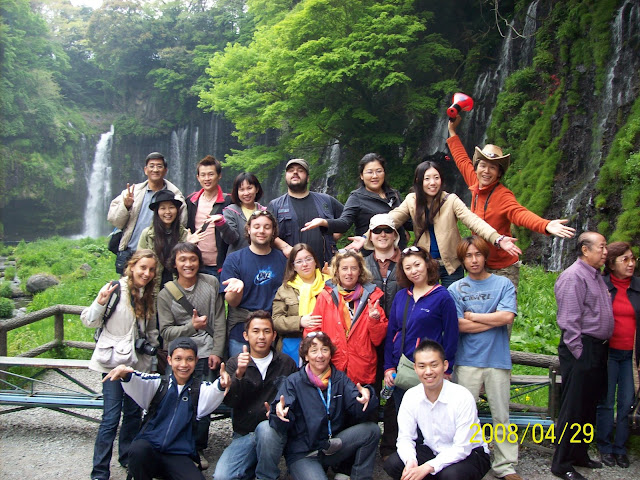
We left Lake Tanuki at around 1430 and Mochan took us to visit the Shiraito waterfall. Ienjoyed the natural environment there as our group walked passes a jungle path leading to the Shiraito Falls. When we were near the waterfall area, the place was crowded, as everyone wanted to find an ideal spot to take a good picture of the waterfall. As there were a lot of greeneries around the waterfall, this place was very cool & refreshing! We met a group of Indonesian tourists near a wooden bridge and together we took a group picture using the waterfall as the background.


At around 1700, we left Shizuoka and headed to Akihabara, Tokyo. We said goodbye to our Italian members, as they would not be joining us for the rest of the bus trip to Nara and Kyoto. In Akihabara, Hitomi and Artem spent an hour roaming the electrical stores, checking the latest prices of various Ipods. While doing the shopping, two of the Wish Club members suggested to Mochan that we should visit Yokohama, since this coastal city is located mid-way between Tokyo and Shizouka. To save time, we bought a take away dinner pack from Yoshinoya, a popular franchised Japanese restaurant. I paid Y360 (RM11.50) for a pack of Gyudon (beef bowl), a delicious dish consists of soy marinated beef slices on a bed of hot steamed rice. If you do not like beef, you could opt for pork or chicken slices.

After an hour drive, we arrived at the port of Yokohama. A large bright Ferris wheel greeted us as we approached the city. We stopped for a short walk at a red brick old warehouse area, now converted into a shopping mall. We spent about 30 minutes at the Yokohama China Town, the largest in Japan and overseas. This China Town has an up market image and I was very impressed with the décor and the colorful lightings of various Chinese restaurants operating there. The menu price of Chinese food served in the restaurants in China Town was very pricey. Imagined the price of a plate of a Yong Chow fried rice was going for Y1000 (RM32)!!! – Crazy isn’t it! We ended our visit after taking a picture of a large Chinese Temple, located in the middle of the China Town. For me, it was really a worthwhile visit and Yokohama lives up to be one of the most vibrant port / city in Japan. Given that Yokohama is about 1 hour by JR train from Tokyo, one would spend a full day exploring and admiring the beauty of this seaport at your own leisure.

We were backed in Mochan’s house at around 22.00 and for me; it was another long and tiring day!

However good or bad a situation is, it will change. We pinned our hope to see Mt Fuji today but there was a change of weather ….


Japan (Shizuoka) April/May 2008 D-5


Travel Highlights – Shizuoka (Ishihara Marine Station & Gyokuro-no-sato Tea Ceremony)

We started our first morning visit to a toyshop in a suburb of Shizuoka. Hitomi & Claire bought a pack of soft toys at a very low price – a real value for okane (money). A bundle of 6-7 toys were selling for a give away price of Y100 (RM3) ! Veryyasui (cheap) !

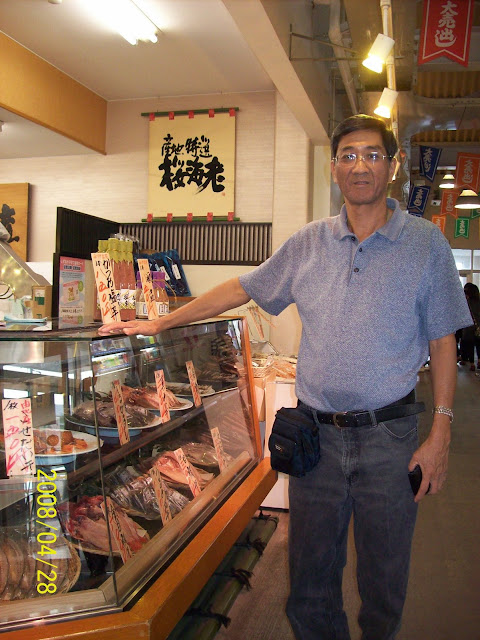
At around 10.00, we arrived at the Ishihara marine station / seafood store. Local tourists like to patronize this store, which stocked a comprehensive range of fresh, frozen and dried fish / seafood products. On the wall, I saw a number of mock up models of blue fin tuna, which were framed in wooden showcases and neatly hung up at the store. To entice shoppers, customers were invited to taste the products prior to purchase. I took the opportunity to try some 15-20 varieties of products on display – a free breakfast treat for me! The processed seafood products were mainly sold in attractive gift packs. We took a group picture at the front of this seafood store prior to entering.


As Van and Claire had to buy some stamps to send some post cards home, Mochan stopped at a yu-bin kyoko (post office) in Shimizu for them to do the necessary. We had a late lunch (14.45) at a Japanese style noodle house in a suburban town. This restaurant had a cozy and nice ambience and the price of the food there was reasonably cheap. I ordered a plate of Chinese dumpling for Y189 (RM6) and a bowl of basic ramen topped with pork slices with soup for Y304 (RM9.70).


After the lunch, Mochan took us to visit Gyokuro-no-sato teahouse, Shizouka. As Japan is famous in producing green tea, we paid Y500 (RM16) to attend a traditional Japanese tea ceremony session in order to appreciate the traditional tea drinking culture during the ruling Samurai period. The ma-e (front) entrance of their showroom had a charming display of handcrafted tea sets made from charcoal!!! On the way to the teahouse, we were given a few packets of fishmeals in pellet forms to feed the Japanese carps reared in a nearby pond. The carps were certainly well fed and bigger than the normal size.

Before entering the teahouse, we had to wash our hands with water flowing from a hollow bamboo pole to a large stone made urn. We had to bend our head to enter the room via a small semi wooden door. The tea ceremony room was well decorated with hanging art objects and calligraphy painting. A lady tea master, dressed in traditional Kimono, conducted the tea ceremony. A heated porcelain pot was used to prepare the green tea and a long handle small bamboo tub was used to pour the tea into our porcelain bowls. Prior to drinking the green tea, we were served with a piece of Japanese savory cake to sweeten our mouth first. The whole tea ceremony session took about 30 minutes. Indeed it was a very good lesson for us and we went away with a greater understanding and appreciation of the traditional tea drinking culture in Japan! Before leaving, we had a quick tour of the main hall of the teahouse, which was well partitioned into a number of small rooms to cater for a bigger group of customers. Our group took some pictures of various tea utensils, tools and calligraphy displayed at the main hall.


Van & Claire were keen to visit a Japanese pearl jewelry shop so Mochan took us to Kosaka Pearl, a well-known pearl jewelry manufacturer in Shizuoka but to our disappointment, the shop was closed today.

We were back in Mochan’s house at around 19.30. I did some shopping at the 100 Yen shop and bought a bath towel, lunch box and under garments for Y400 (RM13). As for tonight’s dinner and breakfast for tomorrow, I bought superfine bread, blue berry jam, leafy vegetables and chicken meat from a nearby supa marketto (supermarket) and I paid Y1, 057 (RM33) for the groceries. Hitomi & Artem too had bought some groceries and sushi at the supa marketto (supermarket). Hitomi was our “executive sou-chef” tonight and she really displayed her culinary skills. We had stir-fried octopus with gravy and chicken cooked with mixed vegetable, prepared in typical Malaysian style to the delight of our host, Mochan and CS members from France! In addition, we had some sushi, bought by Van & Claire to complement our evening meals.

Realize that life is a school and you are here to learn. I had learned to appreciate the art of a traditional tea ceremony in Japan! We see and learn more things as we travel !

Japan (Shizuoka) April/May 2008 D-6


Travel Highlights – Shizuoka (Fujikawa Craft Park, Suntory-no-oka-winery & Shosenkyo Gorge) 

Our visits today mainly focused in the Suntory area, about 70 minutes drive from Shizuoka city.

The first place of our visit was the Fujikawa Craft Park. This 53ha park has a number of recreational facilities and is open to the public who enjoys the natural environment and using the various facilities for picnicking during the weekends and holidays. It has a Fuji garden, calligraphy garden, barbecue area, rest house, playground, old farmhouse, flower garden, canoe pool and picnic area. What a great place to dine and wine! We should have a barbeque of Kobe beef in this place!

The Fuji and Calligraphy gardens we visited had a beautiful landscape with a combination of plants, rocks, sand and water creating a very pleasant environment for visitors to admire the beauty of these gardens. The air was fresh and clean! We spent a short while at the rest house, which was perched on a high ground of the park. From the top, we had a good view of the park and the surrounding environment.

After the garden visit, we visited the Fujikawa craft center, which is a semi structural building housed with seven showrooms and handicraft making workshops. The showrooms displayed a wide range of handicraft items for sales to the public. The items on sale were crystal wares, paper and art products, pottery, wooden crafts etc. The workshops conduct handicraft classes to any young individual or group who like to master their skills in any form of handicrafts taught at the center.


At around 10.15, we arrived at the Suntory-no-oka-winery. This winery was founded in 1890 but their first production of wines was in 1893. As Mochan had earlier made an online booking for our visit and on arrival at their car park, an officer from the winery escorted us to the winery theatre. At around 10.30, a documentary film was shown to the visitors. This 15-minute show gave a brief commentary on how the winery was started in Suntory, the growing & harvesting of grapes, wine production process and winning wine labels etc. After the show, we were given a conducted tour of the wine production plant and also paid a visit to their wine cellar. At the wine retail showroom, a wine tasting session was held and our group tasted three of the red and white wine labels, which were on sale on that day. We spent some time taking pictures at the frontage of the vineyard, which oversees a valley. The place was very scenic with rows of grapevine trees, pine trees and fully blossom flowers (in bright red, yellow & orangey color) in the foreground.


Our last visit of the day was the Mitake Shosenkyo Gorge in Chichibu Tama Kai National Park. We arrived at the Park around 15.00 and took a slow walk to admire the natural environment surrounding the Gorge and Park areas. With lush greeneries, tall green trees dotting on both sides of the foot path, coupled with the sound of splashing running mizu(water) cascading from the upstream of the Gorge hitting on layers of rocks along the way, all these made this place very picturesque and we felt very refreshing as we ascended towards the higher ground. Along the way, we saw rocks in the shape of cannon, heads of turtle and bear etc. Feeling tired, visitors could stop at some resting places with stone made table and chairs for you to sit and stretch your legs. We stopped at a a large signboard overseeing the Kakenpo Peak and decided not to walk any further. We made our way back to the front entrance after spending 1.30 hour in the Park.

The Park has a souvenir shop, which just celebrated its 20-year anniversary and we took a group picture using the background of the Park for remembrance. I bought a small piece of sticky rice snack for Y100 (RM3.20), nicely wrapped and come with some peanut coating and the taste was really yummy !

After the Gorge visit and via another entrance within the Park, we visited the Sengataki Fall. We enjoyed the sight of the Sengataki Fall and took a group picture before leaving.


As it was getting late in the evening, Mochan stopped at two adjacent franchised food restaurants along the way and each of us bought a take away meal and ate in the bus. I paid Y580 (RM18) for a set meal of steamed rice topped with soy and slices of pork.

Clear your clutter from your house, car, desk and let new and flowing energy into your life. It was very refreshing each time I visited a Japanese garden, waterfall, onsen (hot springs), park, gorge and places with lush greeneries. In some of these places, the fresh clean air you breathe gives you the qi to re-energize your body.


Japan (Shizuoka) April/May 2008 D-7

Travel Highlight – Shizuoka (Kosaka Pearl, Shidazmi Sake Brewery, Kawane Onsen, Mariko Village & Pachinko)

I woke up early and went for a morning walk near Mochan’s house. I noticed the surrounding place was well maintained and spotless clean! All the household's rubbish were properly wrapped up and placed at a designated area waiting for collection by the local council trucks. The local residents were very courteous and greeted me with a smile when I bumped into them.

As one of our Wish Club members was to join us for this bus trip, our first stop was the JR Shizuoka Station. After 15 minutes wait, we met up with the member and Mochan drove us to visit the Kosaka Pearl Jewellery shop. This shop was not opened yesterday hence our visit today. Two of our CS members from France, Van and Claire showed an interest in pearl jewelry. We took our time to browse through the showrooms and we were impressed with the quality of pearl jewelry on sale in this shop. These jewelry must betakai (expensive) in price! On display at the store were two well-crafted 3-4ft tall pagodas made entirely of pearls. Also on display were two attractive Japanese dolls with their head gowns & costume laced with pearls.

Kino (Yesterday), we had a winery visit in Suntory. This morning, Mochan took us to visit the Shidazumi Sake brewery, located about 20 km from the Western Shizuoka city. This was another education visit for us as we were eager to know more about how sake is made in Japan. Sake was first made in Japan some 2,000 years ago. At present, Japan has 2,000 breweries in operation. To produce high quality sake. factors such as air, weather, mizu (water), water rice, koji (a kind of enzyme), yeast and the production master, are important considerations in influencing the taste of sake. The owner of Shidazumi Sake told us that his brewery site is near the Seto River, which produced excellent quality mizu(water) for sake production. At the brewery site, we had the opportunity to taste the underground soft mizu (water) released from a hose and we were really convinced of what he had said.

As the best season to produce sake is in winter, we were not able to see any action in the brewery but the owner was kind enough to explain to us how sake was made, the fermentation process, storage & bottling etc. We had a quick tour of the brewery plant and before leaving; we had somesake tasting at the sake cellar. Each of our CS members bought a gift bottle (180ml) of Shidazumi Junmaishu sake for Y300 (RM9.60) as a gesture of goodwill to the owner. This sake has an alcoholic strength of 16%.


Our next visit was the Kawane Onsen Resort (hot spring). This Resort is opened to the public. Japan has 1,800 hot spring areas and onsen resorts had sprung out over some 2,000 years due to Japanese’s love for good, hot steaming bath. Many believe onsen baths helped cure your body ailments and improved blood circulation! Two large lanterns written with four Chinese words called Kawane Hot-springs greeted us at the front entrance. The internal building of this resort has very nice décor and I was fascinated at the sight of two large hanging lanterns, well painted with Japanese traditional fine art. Each of us paid Y500 (RM16) as admission fee for using the hot spring facilities inside.

After buying the ticket, we stored our shoes inside the locker’s room and then entered the wet bathing area (male and female uses separate facilities) to store our personal belongings like clothing, pants, and wallets in another locker. Before soaking into the onsenpools, we had to do a washout on our bodies first. You are not allowed to wear any bath towel onto your body except placing it above your head when soaking inside the onsenpools. All the users had to bathe naked so for some people, they might feel uneasy and odd!!! Due to the steaming temperature, you could begin your hot spring bath by immersing your legs first and after a short while, then your whole body. It is important not to drink any sake (alcohol) beverage prior to taking the onsen bath as this may cause high blood pressure on your head. You may place your bath towel on your head as this may cool the temperature down. Ideally, you should not spend more than an hour on theonsen pool. After closed to 30 minutes of steaming bath, I felt very much refreshed and hungry! So it was time for me to leave the onsen pool and took a shower before heading to the Kawane restaurant.

I joined the rest of the group at the Kawane restaurant and paid Y630 (RM20) via a vending machine for a set meal comprising of a miso soup, picked vegetable, rice with fried pork & egg. We were allowed to have a free flow of Japanese green tea – so this meal was a real value for okane(money)!


When we left Kawane Onsen at around 14.00, it was drizzling outside. Mochan took us to visit Mariko Village, one of the well-preserved Tokaido Villages, which had retained the old charm going back to the ancient period. We were told the old houses in the Mariko Village were used as hostels or rented out to outsiders during the Samurai period. We took a stroll of the village and admired the surrounding beauty. One of the old houses had some old pieces of porcelain wares, arts and figurines for sale to tourists and visitors. As it was drizzling, our kasa (umbrellas) were put to good use.


Our last visit of the day was the Pachinko Slot, located in Plaza Apia. It appeared that the local Japanese enjoyed playing the Pachinko slot and the place was packed with people trying their lady luck on the slot machines. At the plaza, our group had some fun at a mini photo studio. Eight of us placed our mischievous faces in front of a time controlled instant camera and each of us took away a passport size group picture for keeping.

We were backed in Mochan’s house around 8.00pm. I did some last minute shopping at the 100 Yen shop and paid Y1,365 (RM44) for some food (yeast bread), sweets (green tea flavor) & Japanese soup bowls (4 pieces).

We had Japanese porridge in Mochan’s house for dinner.

Take a 10-30 minutes walk everyday. And while you walk, smile. It is the ultimate anti-depressant. I enjoyed the morning walk around the area where Mochan, my Japanese host lives. The air was fresh and the people smiled.